
Telling the story of Christa’s visit to KEDGE in Marseille.

Before anything else, I want to begin with gratitude. This experience at KEDGE Business School would not have been possible without the generosity, openness, and support of several wonderful people who helped bring this collaboration to life. I would especially like to thank Elizabeth Franklin-Johnson (Associate Professor in the Strategy, Sustainability and Entrepreneurship Department), Lisa Thomas (Professor of Strategy), Julien Hanoteau (PhD Program Director), and Katia Richomme-Huet (Associate Dean for Research) for creating this opportunity and for believing in the importance of Positive Academia, doctoral well-being, and cultures of care. Their support, trust, energy, and enthusiasm created the perfect conditions for my workshop to become something genuinely collaborative, co-creative, reflective, and transformative.
I was truly excited from the very beginning of this journey. Traveling from the cloudy skies of London to the bright blue skies of Marseille felt symbolic in many ways – almost like traveling between two emotional landscapes as much as two geographical places. There was a sense of anticipation and curiosity throughout the journey, because I knew this workshop would be quite experiential and different. More importantly, I was deeply looking forward to meeting everyone at KEDGE, connecting with doctoral students and faculty, and collectively exploring how to translate our Positive Academia foundation into practice. What made my experience particularly meaningful was that it did not feel like a simple one-time workshop or invited didactic talk. Instead, it felt like the beginning of something relational, creative, and long-term – a shared commitment to reimagining doctoral life and cultivating more caring and hopeful academic communities.

Positive Academia already exists in practice through everyday acts. Acts such as mentorship, care, encouragement, solidarity, generosity, and community building are quietly created by academics and doctoral students within and across institutions every day. At the same time, our theoretical foundation, expressed in our three journal articles (Sathish & Harzing, 2026a, 2026b, Harzing & Sathish, 2027), has sought to conceptualize, articulate, and make visible these values, interactions, practices, and approaches to transformation more explicitly within our daily academic lives.
What made my visit to KEDGE particularly important was that it became a powerful moment to translate our theoretical foundations of Positive Academia, including our values, interactions, and change-making processes, into collective lived practice and meaningful action. My workshop created a space where ideas around care, belonging, compassion, hope, and collective flourishing moved beyond conceptual discussion and became actively experienced, embodied, and co-created.
Through critical reflection, participation, creativity, dialogue, collaborative activities, and storytelling, Positive Academic was translated from theory into practice – demonstrating how ideas can generate tangible positive impact within the doctoral journey. The workshop highlighted that cultures of care are not created abstractly, but through intentional actions, shared experiences, collective reflection, and everyday practices that shape how doctoral students experience academia emotionally, socially, and intellectually.
There was also something magical about beginning a journey in Marseille. From the moment I arrived, I was struck by the atmosphere around the KEDGE campus. The Mediterranean landscape, blue skies, openness, diverse vegetation, the warmth of the light, and the surrounding nature created a sense of calm and peaceful reflection before the workshop even began. The environment itself seemed to invite connection, creativity, slowness, and openness, values that often feel increasingly rare in contemporary academic life, shaped by speed, productivity, and the constant need to perform at a certain level. I experienced a space that encourages people to pause, reflect, and connect with one another in different ways.

The evening before the workshop started, I attended the PhD Gala dinner. Looking back, I realize that this evening became an important part of the entire experience because co-creating a Positive Academia did not begin in the workshop room itself. It began around tables, through conversations, introductions, shared laughter (a lot of it  ), and the exchange of experiences between academics and doctoral students.
What struck most during the evening was the sense of community that emerged when hierarchy softened, even temporarily. The atmosphere felt warm, welcoming, and relational. It reminded me that academia is not only built through publications, conferences, rankings, and institutional structures. It is also built through little moments of human connection, generosity, vulnerability, friendship, and care.
Throughout the dinner, I had the opportunity to ease into interaction, which was very important for me as a strongly introverted academic. I also shared our Fables of the Academic Zoo and Every Little Action Counts booklet with all doctoral students. I was instantly welcomed by everyone, and the room was filled with joy, positivity, kindness, and openness. It was so wonderful to see everyone’s sheer curiosity as they read some of the fables during dinner, and it led to the funniest conversations about academia!

I went to KEDGE for a first-of-a-kind experiential workshop on The Fables of the Academic Zoo in combination with our PACT (Positive Academia Collective Transformation) and Every Little Action Counts journal articles, and there was uncertainty about how it would turn out. Yet this uncertainty transformed into curiosity, participation, openness, humor, creativity, and collective engagement. The Zoo animals that I brought to facilitate the discussion (see picture) became much more than playful symbols. They became reflective mirrors through which students could recognize experiences, emotions, struggles, hopes, and possibilities within academic life. Through the fables, difficult conversations around exhaustion, competition, vulnerability, imposter syndrome, isolation, performativity, care, belonging, and well-being became easier to approach with honesty, imagination, and emotional openness.

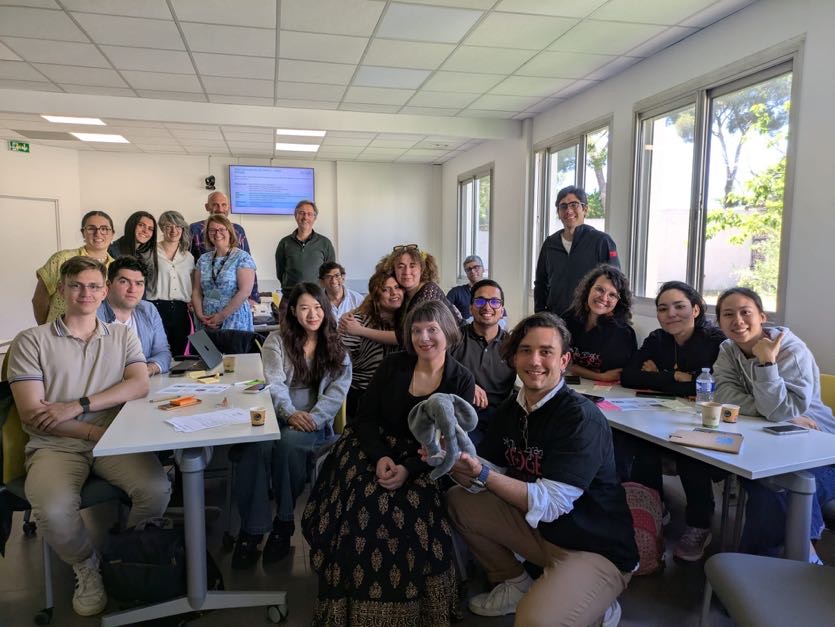
Sometimes stories allow us to speak about academia more honestly and courageously than formal language itself. The animals created reflective distance. They helped participants recognize themselves, their institutions, and their experiences in ways that were both critical and compassionate. Through the animal analogies and individual experiences, participants explored their vulnerability, exhaustion, performativity, competition, exclusion, hope, resilience, care, and belonging without losing space for imagination and possibility. What was especially striking throughout the workshop was the atmosphere in the room. There was energy, happiness, warmth, enthusiasm, humor, and genuine joy! Students, academics, and professional staff participated openly and wholeheartedly in the activities, discussions, and reflections. There was laughter throughout the day, but also moments of vulnerability, deep thinking, and collective honesty. The workshop environment became a safe space for co-creation and thoughtfulness.


The overwhelmingly positive feedback following the workshop reinforced how meaningful this collective experience had become. Many students reflected that it felt refreshing to engage with academia differently, through creative, hands-on storytelling, dialogues, reflection, and collective imagination, rather than only through motivation to perform and produce. Others highlighted how valuable it was to feel emotionally connected, heard, understood, and supported within their doctoral space. What began as an experimental workshop using The Fables of the Academic Zoo evolved into something deeply impactful, emotionally resonant, and transformative for many participants.
The workshop was intentionally designed as a fully analog experience. In a world where academic life is increasingly dominated by screens, AI, notifications, emails, metrics, and digital overload, the workshop created a very different kind of academic co-creation. Nobody used a laptop to look up things or ChatGPT them. Instead, there were conversations, personal reflections, storytelling, drawing, coloring, paper, collaborative exercises, and collective creativity. The workshop’s analog nature became symbolic in itself. It encouraged slowness, attentiveness, presence, embodiment, and human interaction. It reminded us that academia is not only intellectual labor; it is also emotional, relational, social, and deeply human.
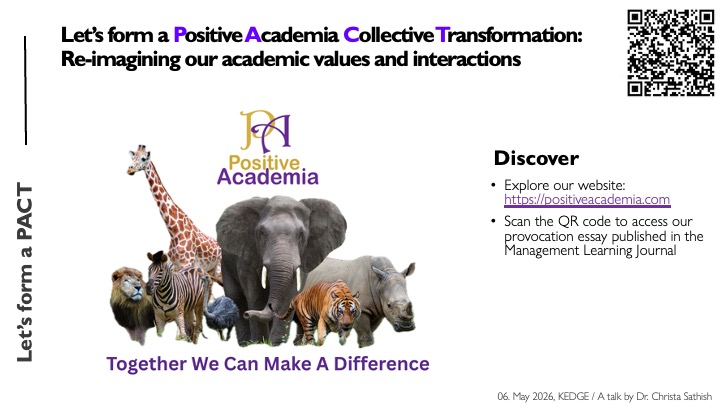
At the beginning of the workshop, the doctoral students were introduced to our Positive Academia Foundation – the PACT manifesto, The Fables of the Academic Zoo, and the Every Little Action Counts publications. Together, we explored Positive Academia not as toxic positivity or the denial of challenges, but as a critical, hopeful framework for reimagining our academic lives by doing.
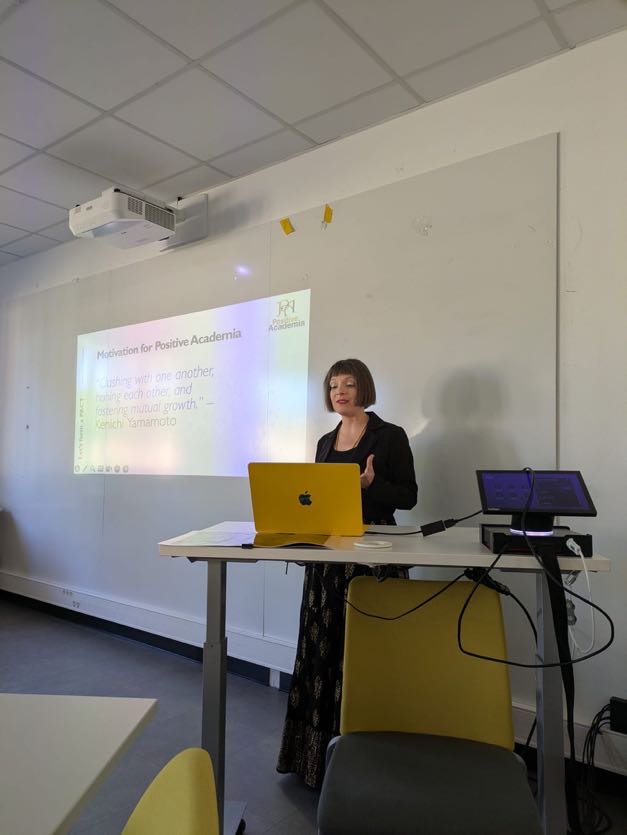

We acknowledged the realities many doctoral students experience:
uncertainty, pressure to publish, imposter syndrome, competition, precarity, emotional exhaustion, hyper-productivity, harsh review processes, and a lack of belonging.
However, we also asked a different question: What kind of academic culture do we want to help create despite these realities, and what would a caring academic zoo look like?
Throughout the workshop discussions, we repeatedly returned to the idea that every little action matters.
- A supportive comment.
- Checking on another doctoral student.
- Sharing an opportunity.
- Sharing positive news.
- Encouraging someone before a presentation.
- Recognizing our work.
- Well-being and work-life balance
- Slowing down.
Showing kindness.
These actions may appear small individually but collectively shape the emotional and cultural glue of our academic landscapes. As the workshop progressed, the doctoral students did not simply discuss Positive Academia theoretically. They became active co-creators of it.
Together, they created what became known as the ‘Zoo of Hope’. Through animals, analogies, stories, reflections, drawings, and collective imagination, the students developed their own representation of academic life – not only its challenges, but also its possibilities. Each animal carried a symbolic meaning, such as resilience, vulnerability, courage, exhaustion, transformation, care, slowness, or belonging. The room transformed into a shared, reflective, and creative space where academic experiences could be explored honestly, safely, collectively, and imaginatively.
Among all our animals, one became especially significant. The elephant!
As conversations evolved, the PhD student Togan Kılıç named the Positive Academia elephant mascot ‘Hope’. Later, with Lisa and Elizabeth, we added her last name, ‘Attenborough,’ and dedicated our mascot to David Attenborough, who turned 100 years old at the same time our mascot and our collaboration with KEDGE was born. David Attenborough is an important inspiration for Positive Academia’s approach to caring for our institutions and society, and there is much reason to hope that, together, we can make a difference for you and me and everyone else.
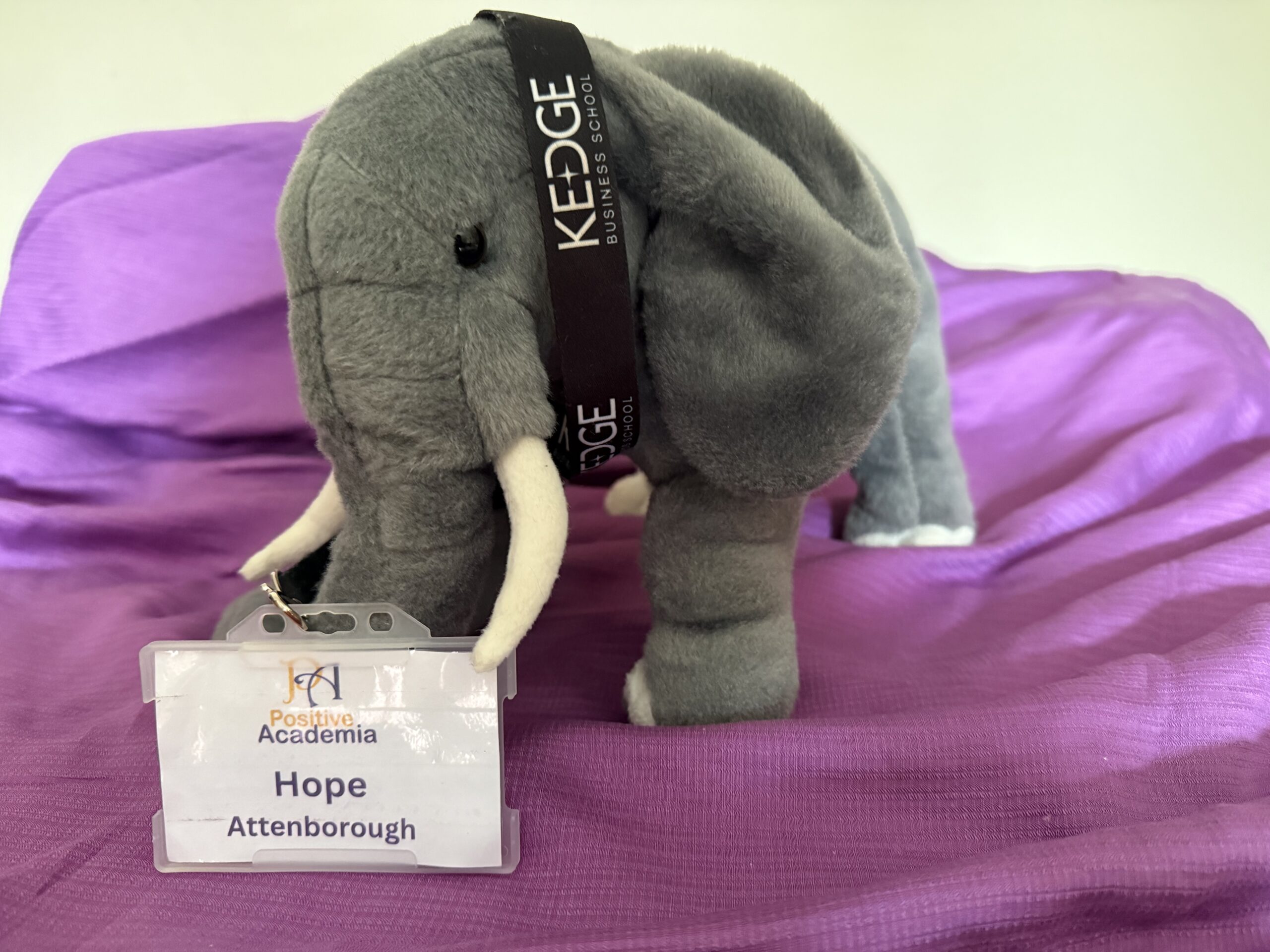
Elephants are often associated with memory, protection, wisdom, nurturing, care, and emotional connection. They survive not through isolation or mere competition, but through cooperation, interdependence, support, and community. So, what would academia look like if it moved more like elephants? What would happen if care were treated as central rather than secondary in our academic life? What would doctoral education look like if students and academics walked beside one another rather than constantly competing with and directing each other?
The naming of Hope Attenborough became far more than a creative workshop exercise. It became a collective symbol of the kind of academia the students wished to imagine and cultivate together. At the end of the session, each doctoral student received a small animal figure to take home – a symbolic reminder that Positive Academia is not simply an idea discussed during a workshop, but something carried into everyday academic life through actions, relationships, and communities of care. The figures became a small but meaningful representation of continuity. They symbolized the idea that every participant contributes to shaping the wider academic ecosystem through their actions, behaviors, relationships, and values.
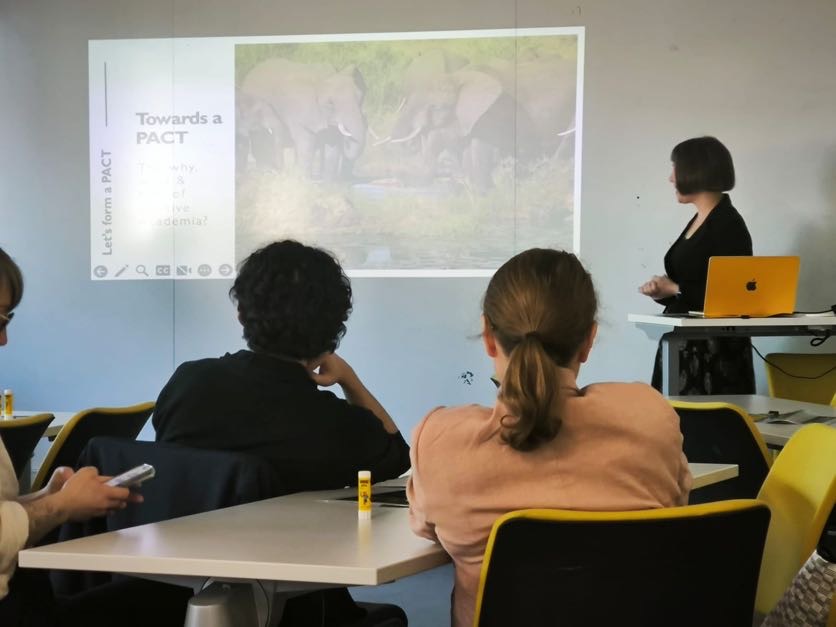
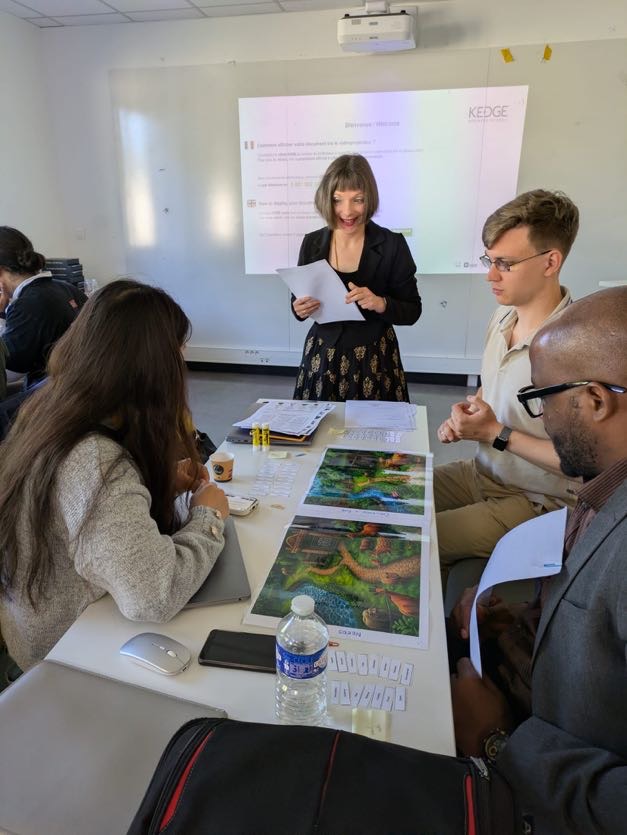
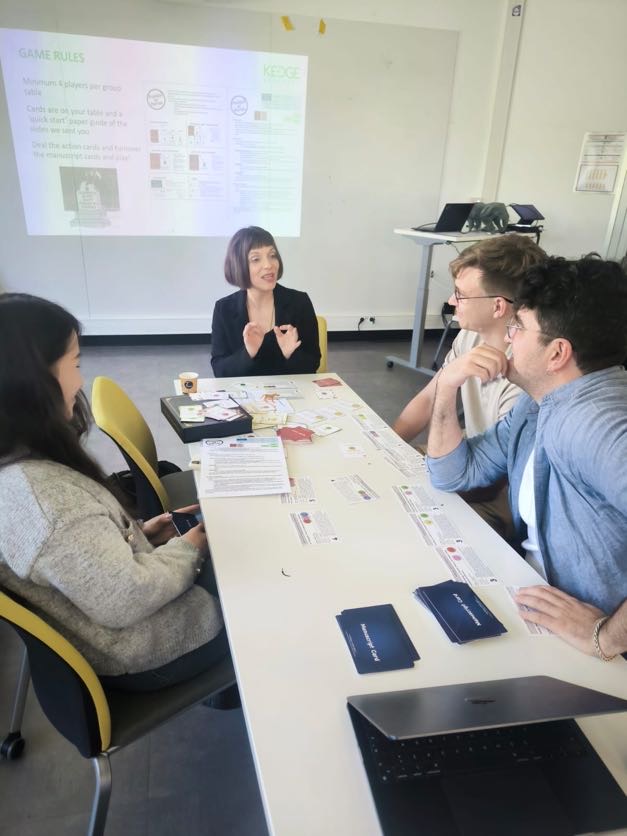
In the afternoon, we shifted into a fun and critical space through participation in the Publish or Perish game, led by Elizabeth Franklin-Johnson and Lisa Thomas. Importantly, I participated alongside the doctoral students rather than simply facilitating or observing. This mattered deeply because it enabled me to collectively experience, question, and reflect upon how the doctoral students feel about situations in their writing journey. The Publish or Perish game became a powerful mirror of many aspects of writing and reviewing. It reflected pressures related to productivity, competition, performativity, publication expectations, career insecurities, and institutional success metrics. Yet even within this critical reflection, the atmosphere remained collaborative, reflective, supportive, and constructive.
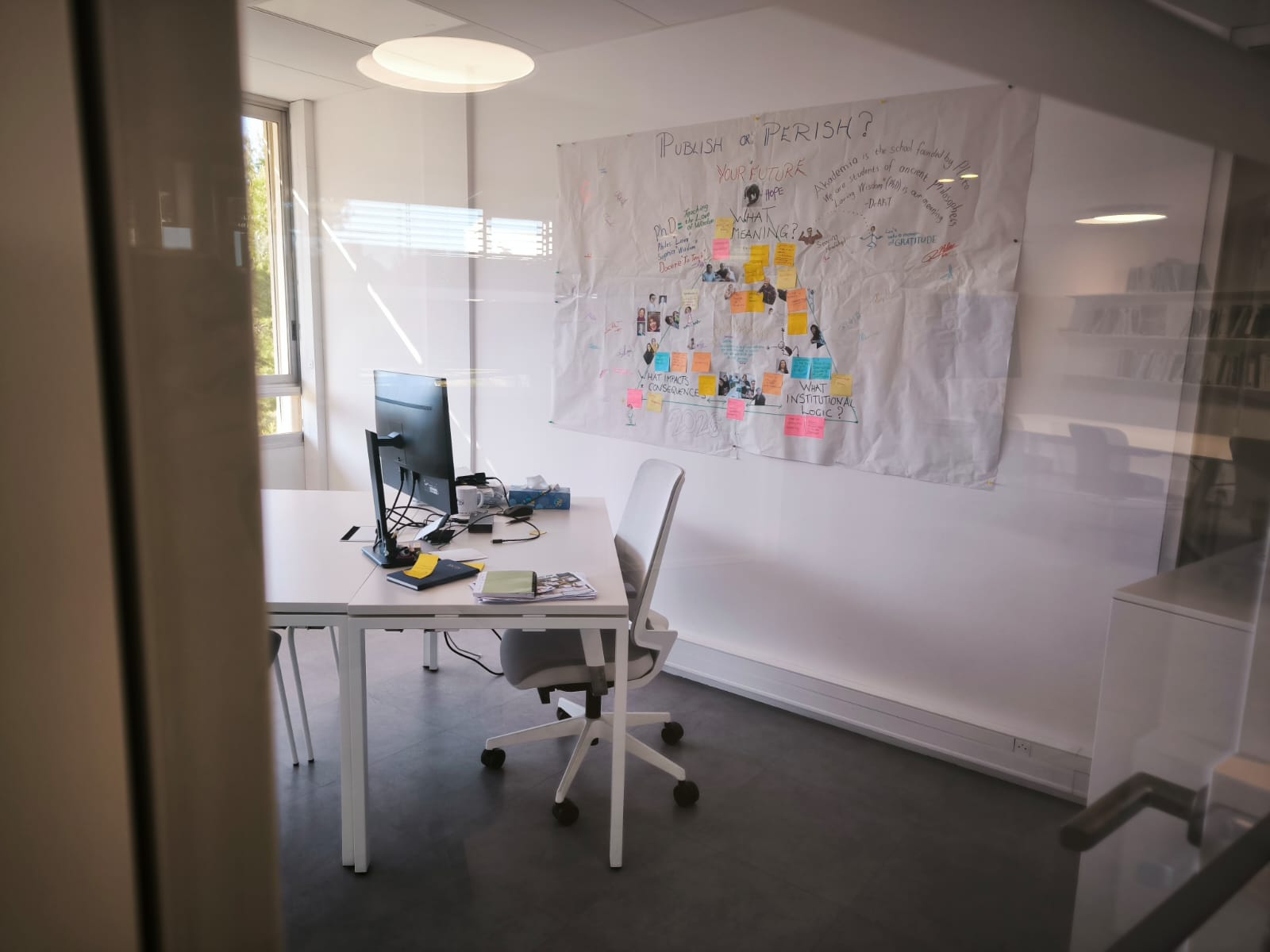
Following the game, the doctoral students collectively integrated the values, actions, perspectives, reflections, and ideas into a mind map that now proudly hangs on Julien Hanoteau’s (PhD Program Director) office wall ☺. The students not only mapped the realities of their academic journey but also the values and practices that could support the co-creation of healthier, more caring, and more hopeful academic cultures. More importantly, the mind map demonstrates that a positive academia is not built individually or in isolation. It is co-created through dialogue, reflection, creativity, participation, and action. By the end of the afternoon, what remained most visible was not exhaustion or cynicism, but hope, connection, creativity, belonging, and, most importantly, possibility!
Finally, what started as an experiment using The Fables of the Academic Zoo became a deeply successful and meaningful collective experience – one that demonstrated how Positive Academia can move from theory into lived practice, capable of generating genuine positive impact within the doctoral journey. Looking back, one of the most powerful aspects of the experience was witnessing how quickly communities of care can emerge when we are given the permission to slow down, reflect critically, imagine collectively, and create together.
Academia is shaped every day by small but very meaningful human interactions. Through:
How we supervise.
How we collaborate.
How we cite others.
How we mentor.
How we respond to vulnerability.
How we support colleagues.
How we welcome new scholars.
How we recognize the power of difference.
And how we choose to treat one another.
Cultures of care are not built overnight. They are cultivated slowly through communities willing to imagine something different and through individuals willing to take one little action at a time. And perhaps that is why Hope Attenborough became such an important symbol for the workshop.
Because elephants rarely walk alone. Perhaps we should not either!
